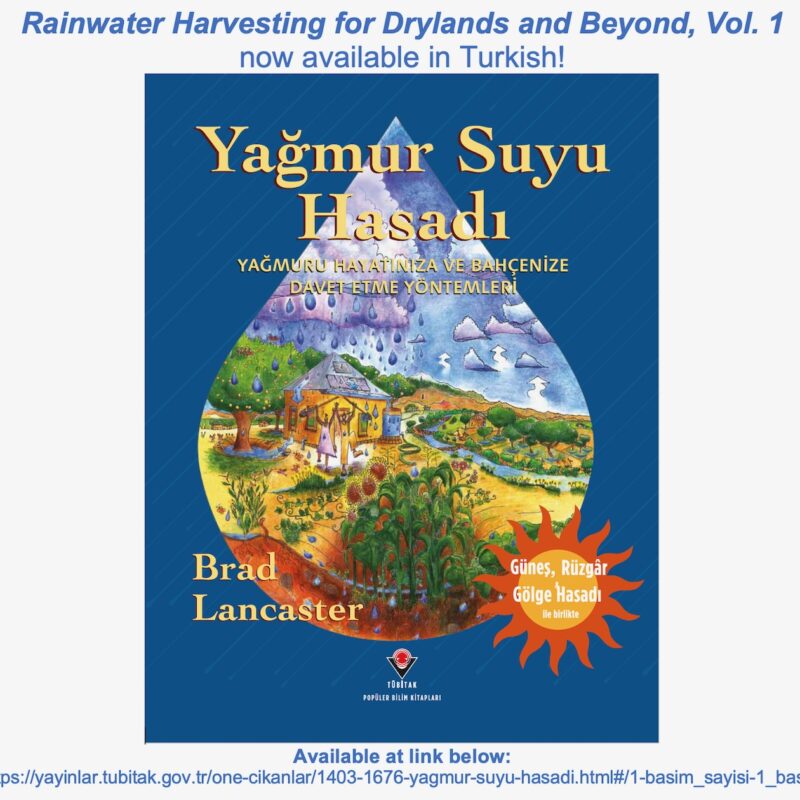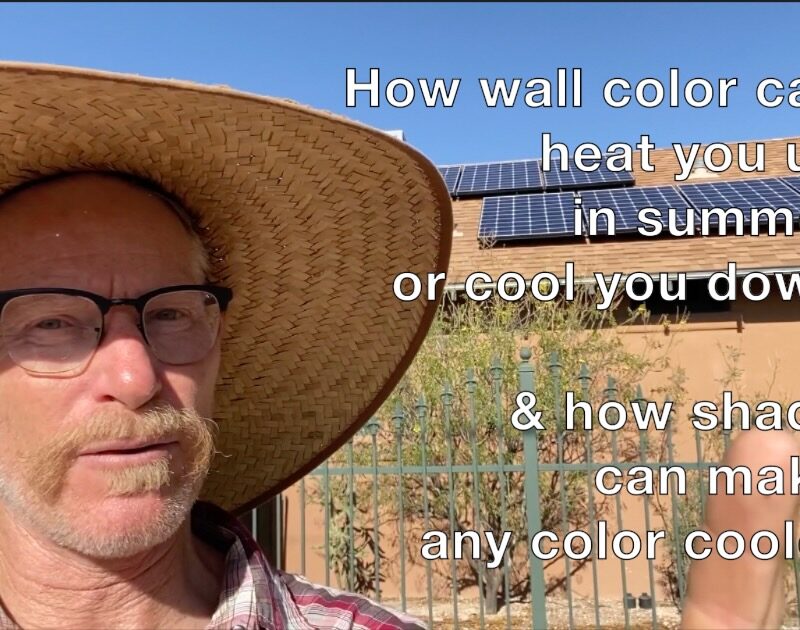
Turn scarcity into abundance!
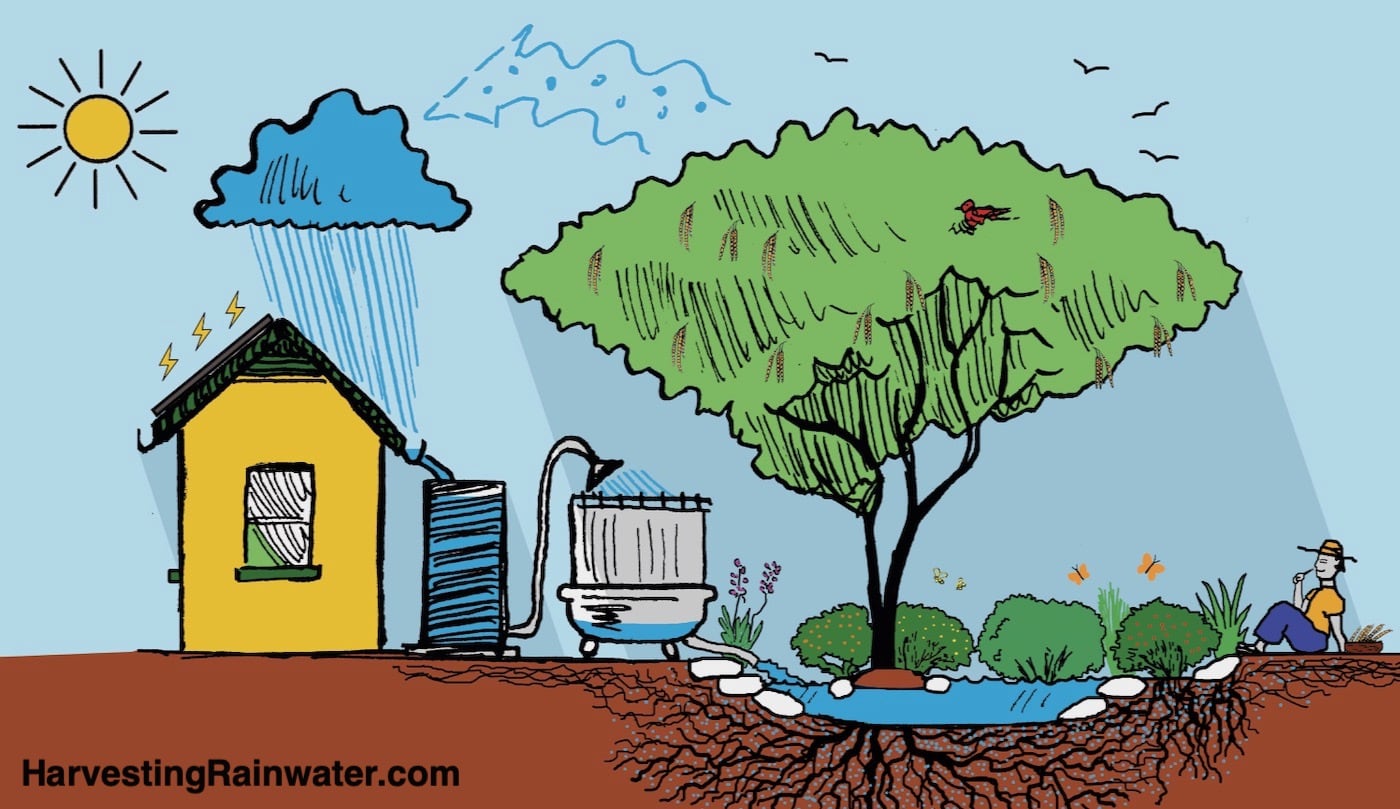
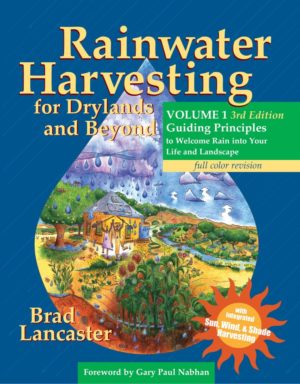
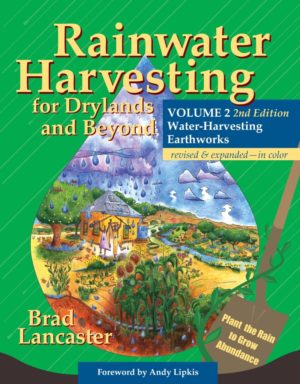
This website—and its sister books, resources, and projects—strive to enable you to better collaborate with, and contribute to, many living systems that spark and regenerate life for all. They help you to see, and act, in new conscious ways, so “wastes” become resources, and “problems” become potential. It’s about utilizing what is already freely at hand to turn scarcity into abundance.
For example, in my desert city of Tucson, Arizona (where we get an average of 11 inches [280 mm] of annual rainfall), more water falls as rain on our city in an average year than the entire population of the city (over half a million residents) consumes of municipal water (the bulk of which is imported/pumped in at great cost from the Colorado River over 300 miles away) in a year. So, we’d typically have more free local water than we need if we’d consciously harvest it, rather than wastefully drain it away. And we don’t need any fancy equipment or large infrastructure to do so.
You start where you are—where you live, work, study, grow, and/or play; in a way that lifts you, as it also lifts others, our larger communities, and the ecosystems we’re all nested within; so that our combined health and potential—our true wealth—improves and evolves.
These books show you how to conceptualize, design, and implement regenerative water-, sun-, wind-, and shade-harvesting systems for your home, landscape, and community. They enable you to access your on-site resources (rainwater, greywater, topsoil, sun, plants, and more), give you a diverse array of strategies to maximize their potential, and empower you with guiding principles to create an integrated, multi-functional resource-harvesting and -enhancing landscape plan specific to your site and needs. These books will help bring your site to life, reduce your cost of living, endow yourself and your community with skills of self-reliance and cooperation, generate renewable on-site power, and create living air conditioners of vegetation that grow beauty, food, flood-control, and wildlife habitat. Stories of people who are successfully welcoming rain into their life and landscape will invite you to do the same!
Featured video
Water Harvesting
Rehydrate through the harvest of free on-site waters such as rainwater, stormwater, greywater, condensate, dew, snow, and fog to grow more regenerative abundance for you, your community, and the world
Sun & Shade Harvesting
Collaborate with the seasonally changing path of the sun to maximize free winter heating and lighting, while also maximizing free summer cooling and comfort, and enhanced on-site power production and vegetative growth year round.
Resources
that better connect you with the unique potential of your place so that you can better understand and collaborate with the natural systems that sustain us
Recent Blog Entries
April 24, 2024
Catching Water audio interview